The Quiet Revolution: How Small Businesses Are Winning on Social Media Without a Video Team
Success Stories
5 Min Read

For most of the last decade, video content on social media was a game small businesses simply could not play at the same level as larger competitors. The cost of decent production, the time required, the equipment, the editing software, the learning curve: it added up to a barrier that kept most small business owners stuck with static posts while their competitors with marketing budgets ran rings around them.
That barrier has largely collapsed in the last twelve months. Not because production got cheaper in the traditional sense, but because a new category of tool arrived that removes production from the equation entirely.
This is the story of that shift, told through the people living it.
THE PROBLEM THAT NEVER GOT SOLVED
Why small businesses lost the video race for so long
The data has been consistent for years. Video generates more engagement than any other content format. Audiences retain more from video than from text. Platforms algorithmically favour video. Every marketing report for the last five years has said some version of the same thing: if you are not publishing video, you are losing ground.
And yet the majority of small businesses were not publishing video regularly. Not because they did not know it mattered. Because the practical reality of producing even a single decent video was prohibitive.
The real barrier: A professionally produced 2-minute explainer video cost between Rs. 15,000 and Rs. 1,20,000 and took 3 to 10 business days. A small gym owner, a clinic, a boutique retailer, a consultant: none of them had a production budget sitting around. And even if the money was there, the time was not. |
The workaround most small businesses landed on was to either avoid video altogether, or to post occasional shaky phone footage with no captions and hope for the best. Neither worked particularly well.
WHAT CHANGED
The tool that shifted the equation
Video making AI tools, platforms that take written content and convert it into fully produced videos with voiceover, captions, and visuals automatically, have existed in rough form for a few years. What changed in 2025 and accelerated through 2026 is the quality, the speed, and the accessibility.
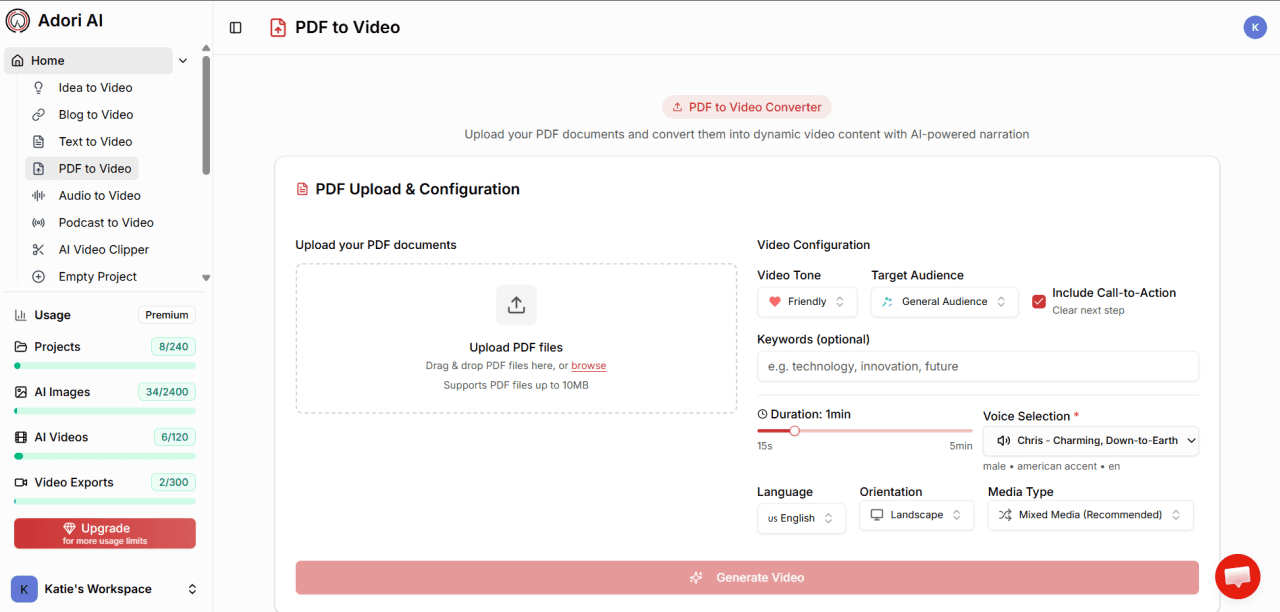
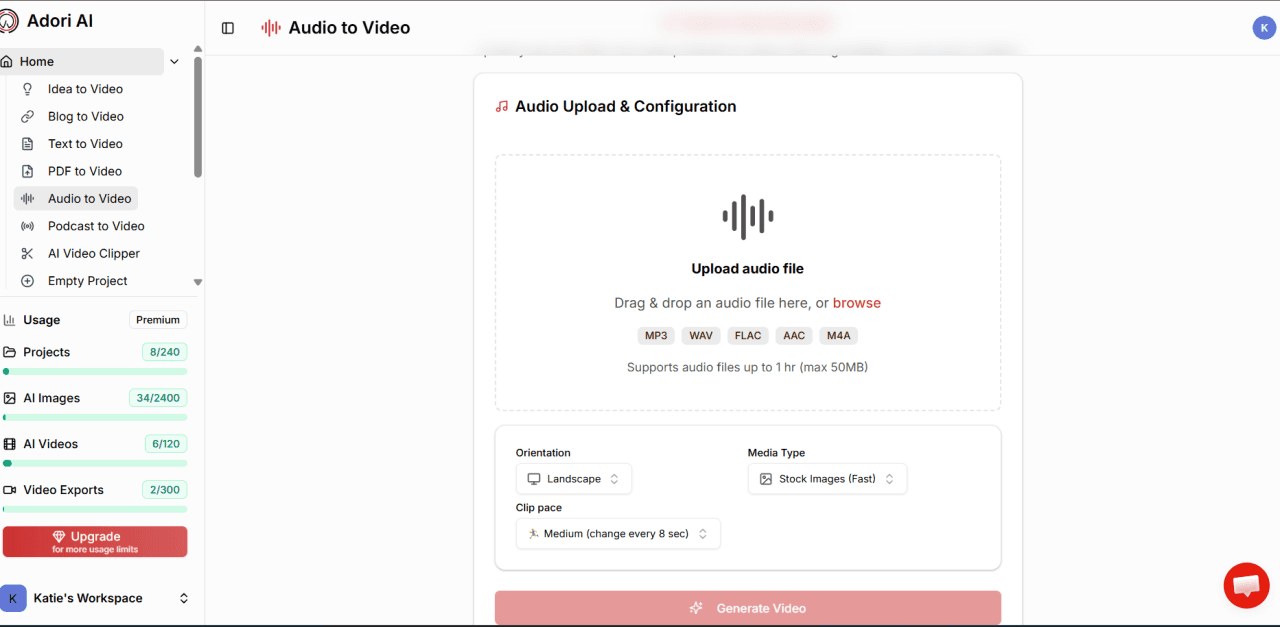
The workflow that small businesses are now using looks like this: take something you have already written, a product description, a service explainer, a FAQ answer, a blog post, even a quick paragraph typed out fresh. Paste it into the platform. Choose a voice. Review the draft video the AI assembles. Adjust anything that needs changing. Export and share. Total time: 15 to 25 minutes for most people after the first few attempts.
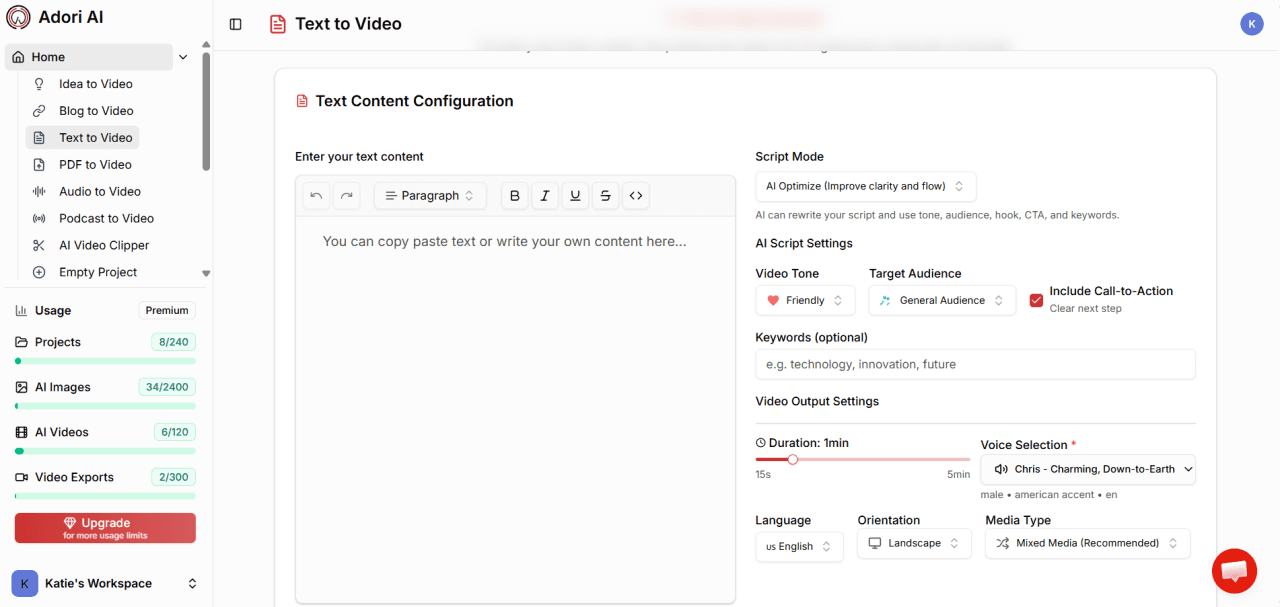
The output is not cinema. Nobody is confusing these videos for Netflix productions. What they are is clear, professional, watchable, and consistent. For a small business trying to show up regularly on Instagram, YouTube, LinkedIn, or WhatsApp, that is exactly what is needed.
REAL BUSINESSES, REAL RESULTS
Five types of small business using this right now
The independent clinic
Healthcare professionals, particularly those running private practices, were among the earliest practical adopters. The use case is simple: patients need to understand their care instructions, and text leaflets have a measurably poor retention rate. A 2-minute video sent via WhatsApp before a patient leaves the clinic is watched, rewatched, and shared with family members.
Dr. Ananya Mehta Cardiologist, private practice "I typed out my standard post-angioplasty care routine once. It took 18 minutes to turn into a video. I have now sent that same video to over 200 patients. The follow-up calls asking basic questions dropped by roughly a third." |
The fitness studio
Gyms and fitness studios live and die by content. Class schedules, trainer introductions, form guides, motivational content, nutrition tips: there is no shortage of things to post. The problem has always been producing enough of it consistently without a full-time content person.
Studio owners are now converting their existing knowledge, the same things they say to clients in person, into short videos that run across Instagram Reels and YouTube Shorts. One studio owner in Bengaluru reported publishing three videos a week for the first time in her business, using about 45 minutes of total production time.
The professional services firm
Accountants, lawyers, financial advisors, and consultants have a specific challenge: their expertise is genuinely valuable, but it lives inside documents and conversations that never reach potential clients. A 90-second video explaining a common tax question or a simple legal concept reaches people who would never find a whitepaper.
Rohan Verma Independent financial advisor, Mumbai "I had twelve years of client notes, explainers I had written for people, and answers to questions I had been asked hundreds of times. Turning those into videos took a weekend. I published ten videos in two months. Three new clients came in saying they had watched them." |
The retail shop and e-commerce seller
Product videos are one of the highest-converting content formats in e-commerce. A short video showing a product, explaining its key features, and addressing the main buying questions performs significantly better than a static image with a description. The barrier for most small sellers has been production cost.
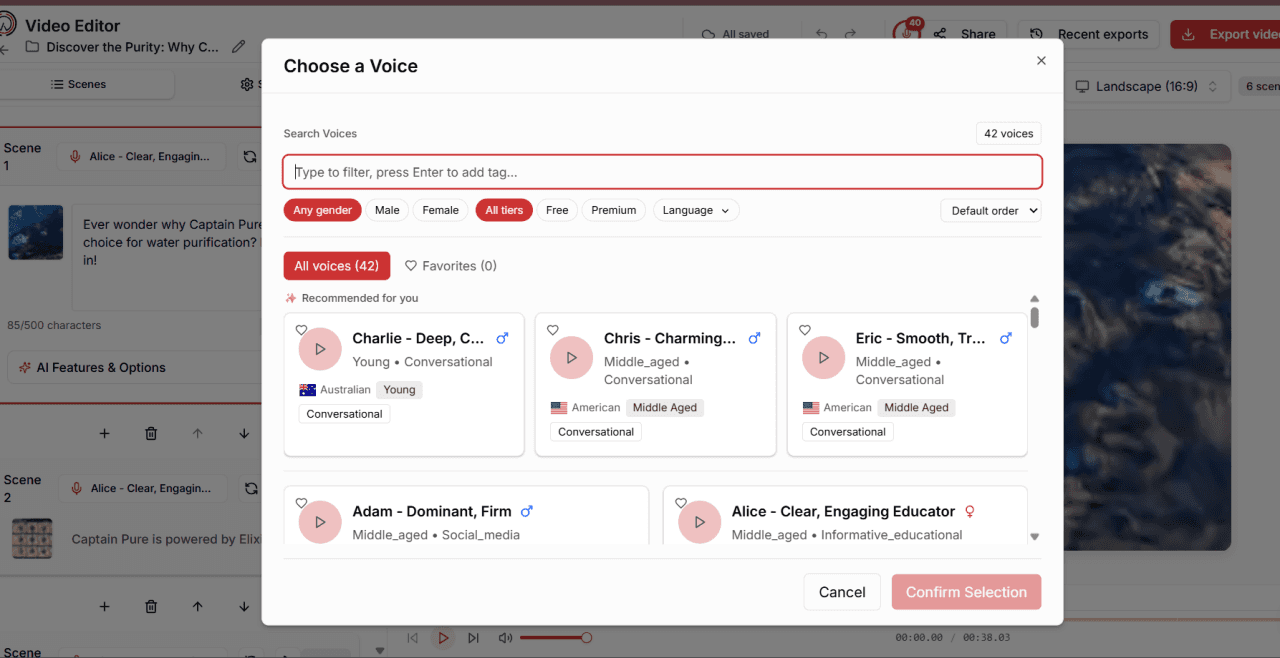
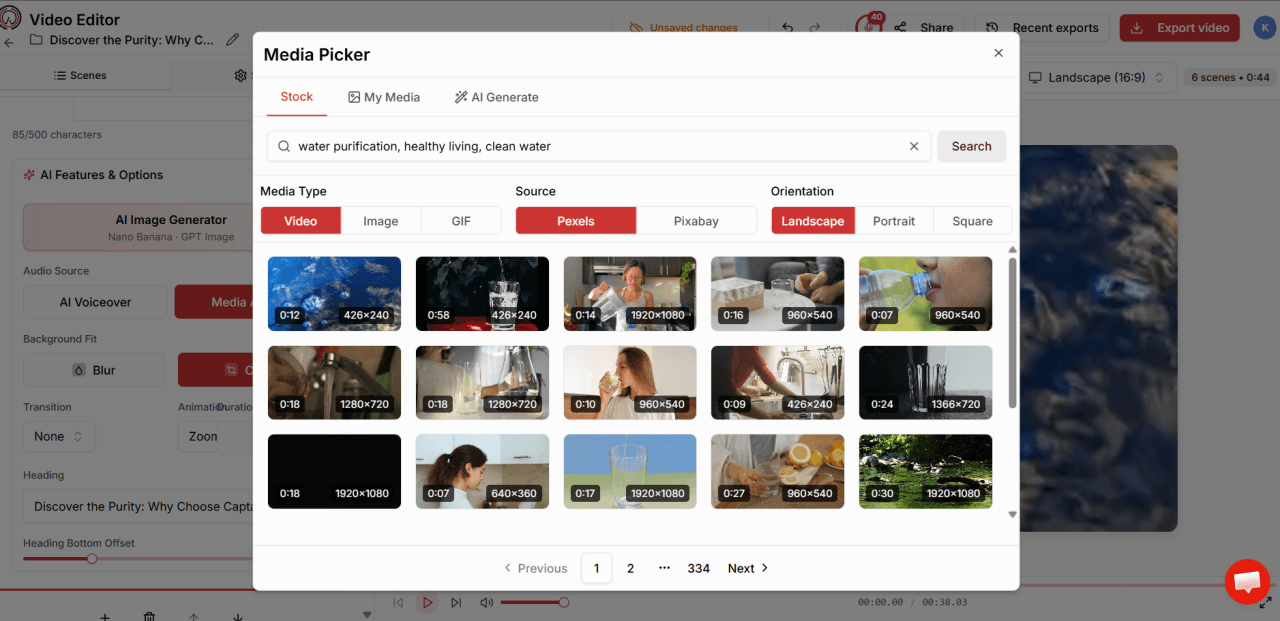
Sellers are now turning their existing product descriptions into video. The AI matches the text with contextual visuals from a library of over 100 million assets, adds a voiceover, and produces something share-ready in under 20 minutes. For a seller managing 50 products, the difference in content output is enormous.
The restaurant and hospitality business
For food and hospitality businesses, content is atmosphere. A video explaining the story behind a dish, the sourcing of ingredients, the weekend special, the new menu: this is exactly the kind of content that builds loyal local following. It is also exactly the kind of content that nobody in a small restaurant team has time to produce properly.
Restaurants are turning menu descriptions, chef notes, and seasonal specials into short videos that run on Instagram and local Facebook groups. The production time is low enough that it can be done between the lunch and dinner service.
WHAT THE OUTPUT ACTUALLY LOOKS LIKE
Captions, voiceovers, and the editor
One of the consistent things reported by small business owners using these tools is surprise at the quality of the output. The expectation going in is often something rough and obviously automated. The reality is that auto-captions sync accurately, the voiceover options include warm and professional registers suited to different types of content, and the visual selection is contextually appropriate rather than generic.
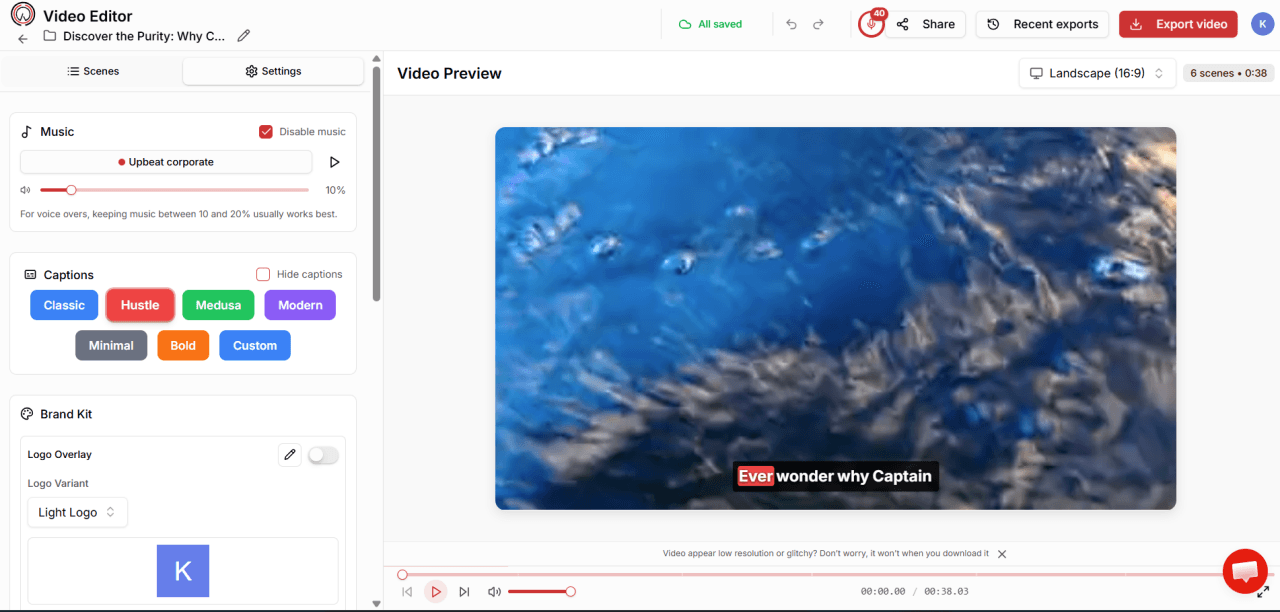
The live editor allows scene-by-scene adjustment. If a visual does not fit the content, it can be swapped. If the caption timing is off, it can be corrected. Most people report spending less than 5 minutes in the editor per video once they are familiar with the workflow.
THE HONEST PICTURE
What this does not solve
These tools are genuinely useful for a specific type of content: information-based video where the goal is clear communication. Explainers, guides, product descriptions, service overviews, FAQs, announcements.
They are not a substitute for authentic behind-the-scenes content, face-to-camera personality videos, or anything where the specific person matters more than the information. A restaurant owner filming their kitchen at 6am has something AI cannot replicate. A personal trainer showing their own transformation has something that a produced video cannot match.
The practical approach most successful small businesses are landing on is to use AI video for their informational and marketing content, and reserve their limited time for the personal, authentic content that only they can create.
GETTING STARTED
What the first week looks like
For most small business owners trying this for the first time, the experience follows a predictable pattern. The first video takes about 30 minutes including figuring out the interface. The second takes 20. By the fifth, most people are under 15 minutes.
The platform most small businesses are landing on for this is AdoriAI. It accepts text, PDFs, blog posts, and audio recordings as input, and converts them into finished videos with voiceover, captions, and visuals. It is an AI video tool built specifically for people who have content but not production resources. Plans start at $5 for a one-time trial, which produces one complete video. The Basic plan at $15 per month covers 15 video exports, enough for a consistent weekly publishing schedule.
The small businesses winning on social media right now are not the ones with the biggest production budgets. They are the ones that found a consistent workflow and stuck to it. The tools to do that are now genuinely accessible to anyone with something useful to say.
Start publishing video content this week.
No camera. No video team. No production budget required.
Try free at app.adoriai.com
Join our newsletter list
Sign up to get the most recent blog articles in your email every week.
Similar Topic