AI Audio to Video Generator: How It Works and Which to Use
News & Insights
6 Min Read

AI audio to video generators: how AI is changing content creation
People now watch more than they listen, and that includes podcasts, lectures and interviews. If your content lives in audio files, an AI audio to video generator is the fastest way to get it onto YouTube and social feeds. Upload the audio, and the AI adds the visuals, captions and pacing that used to take a video editor hours.
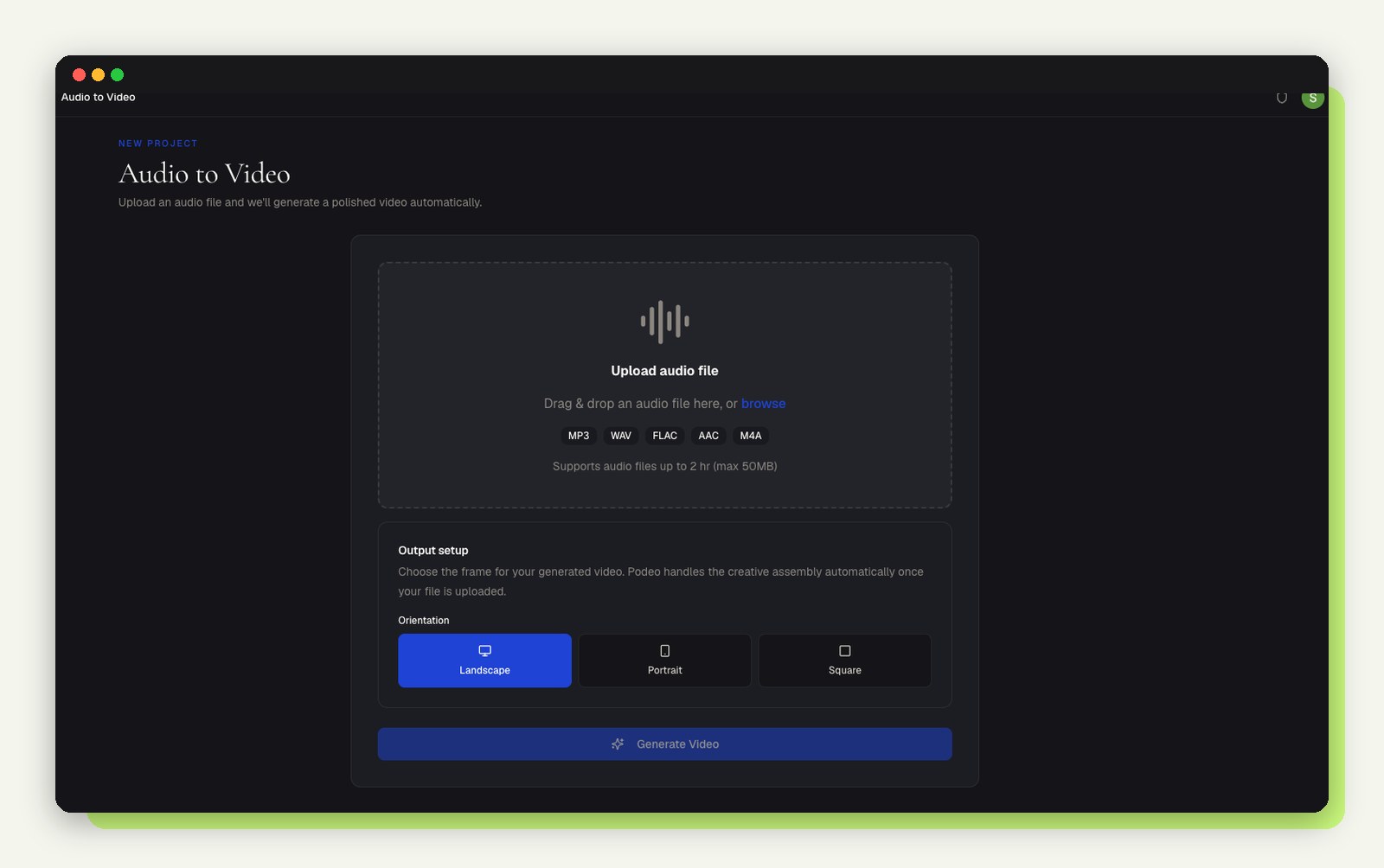
What is an AI audio to video generator?
It is a tool that turns an audio file (such as MP3, WAV or M4A) into a video automatically. Instead of you choosing footage, syncing subtitles and cutting scenes, the AI listens to the recording and does it for you. The better tools understand what is being said, so the visuals change with the topic instead of looping one background.
What AI changes in the workflow
Visuals that follow the words: the AI picks or generates footage for each moment based on the transcript.
Accurate captions: speech is transcribed and timed to each word, often with translated subtitles.
Hours to minutes: a full episode or lecture becomes a watchable video in the time it takes to render.
Consistent branding: your logo, colours and fonts are applied to every video.
Built-in discovery: the best tools also write the title, description, chapters and thumbnail.
Who it is for
Podcasters who want every episode on YouTube, not just in podcast apps.
Educators turning lectures and voice notes into video lessons.
Marketers repurposing webinars, interviews and voiceovers.
Churches and speakers sharing sermons and talks as video.
Best AI audio to video generators compared
Tool | Best for | Output |
|---|---|---|
Podeo.ai | Podcasters and long spoken audio | Full-length directed video with captions, b-roll, chapters and thumbnail |
Pictory | Marketers working from scripts | Storyboard videos from a stock library |
VEED | Creators who want to edit by hand | Browser editor with AI subtitles |
Headliner | Quick social teasers | Short audiograms with a waveform |
1. Podeo.ai

Podeo.ai is made for long spoken audio. Its AI, Podeo Director, reads the whole recording, writes a visual script and renders a finished video, placing stock or generated b-roll on the line that calls for it. Captions are timed to the word, and every export comes with an AI title, description, chapters and a thumbnail, ready to publish to YouTube. Recordings up to 120 minutes are supported.
Best for: podcasters, educators and anyone with long audio
Strengths: full-length videos, chat-based editing with Podeo Copilot, direct YouTube publishing
2. Pictory
Upload audio or a script and Pictory builds a storyboard, choosing visuals from a large media library.
Best for: marketers and educators
Strengths: automated scenes, brand presets
3. VEED
VEED is a browser video editor with AI features for subtitles, trimming and design.
Best for: creators and small businesses who want hands-on control
Strengths: clean interface, fast rendering, AI subtitles
4. Headliner
Headliner makes short audiograms: an audio clip over a waveform and an image.
Best for: teasers on social media
Strengths: quick and simple
How to turn audio into video with AI, step by step
Upload your audio. Drop in an MP3, WAV or M4A file, or pick a podcast episode from its RSS feed.
Choose the shape. Landscape for YouTube, portrait for Shorts and Reels, square for LinkedIn.
Let the AI build it. It transcribes the audio, writes the visual plan and renders the video.
Make changes. Adjust scenes on the timeline, or describe the edit in a chat box.
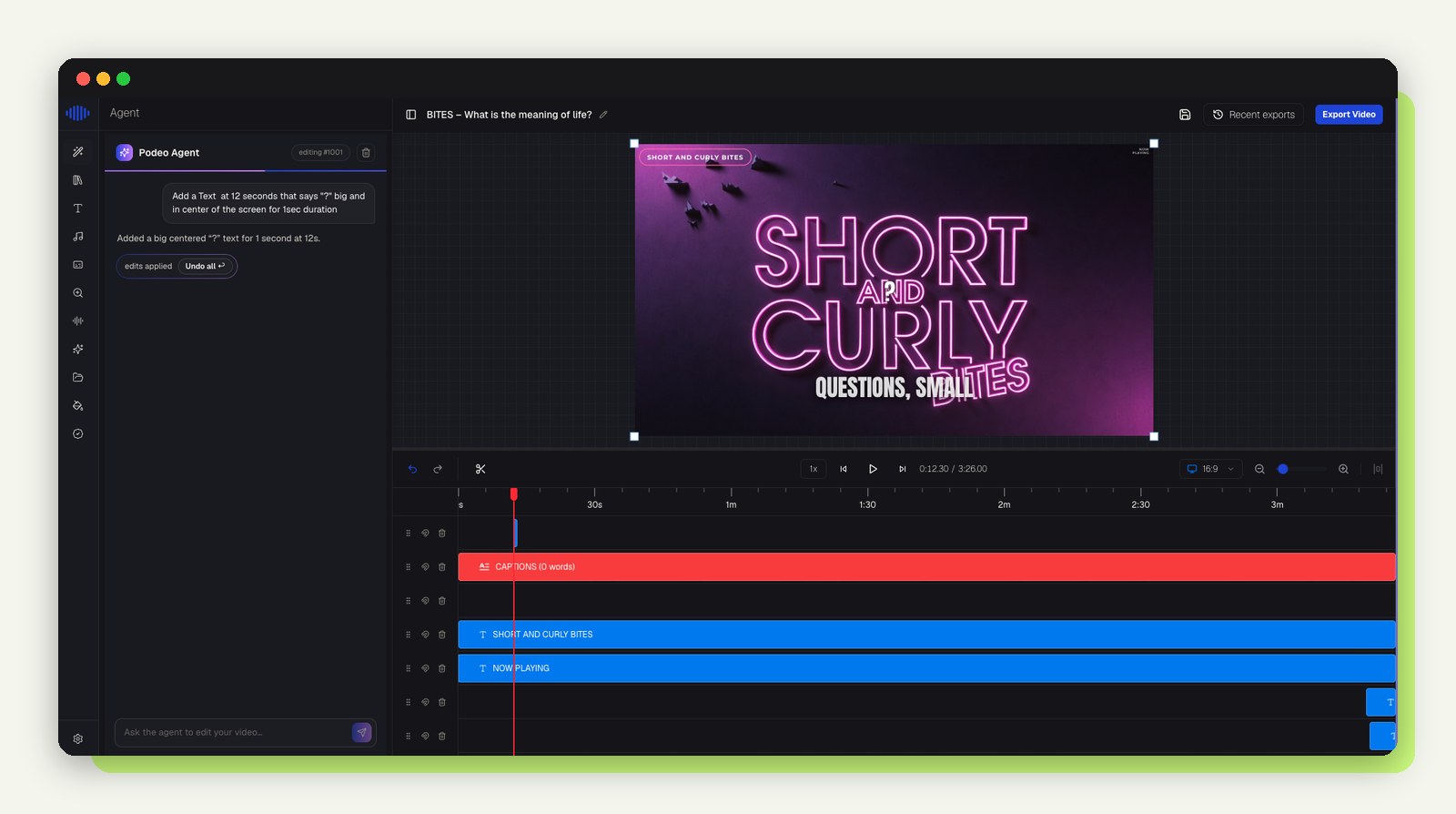
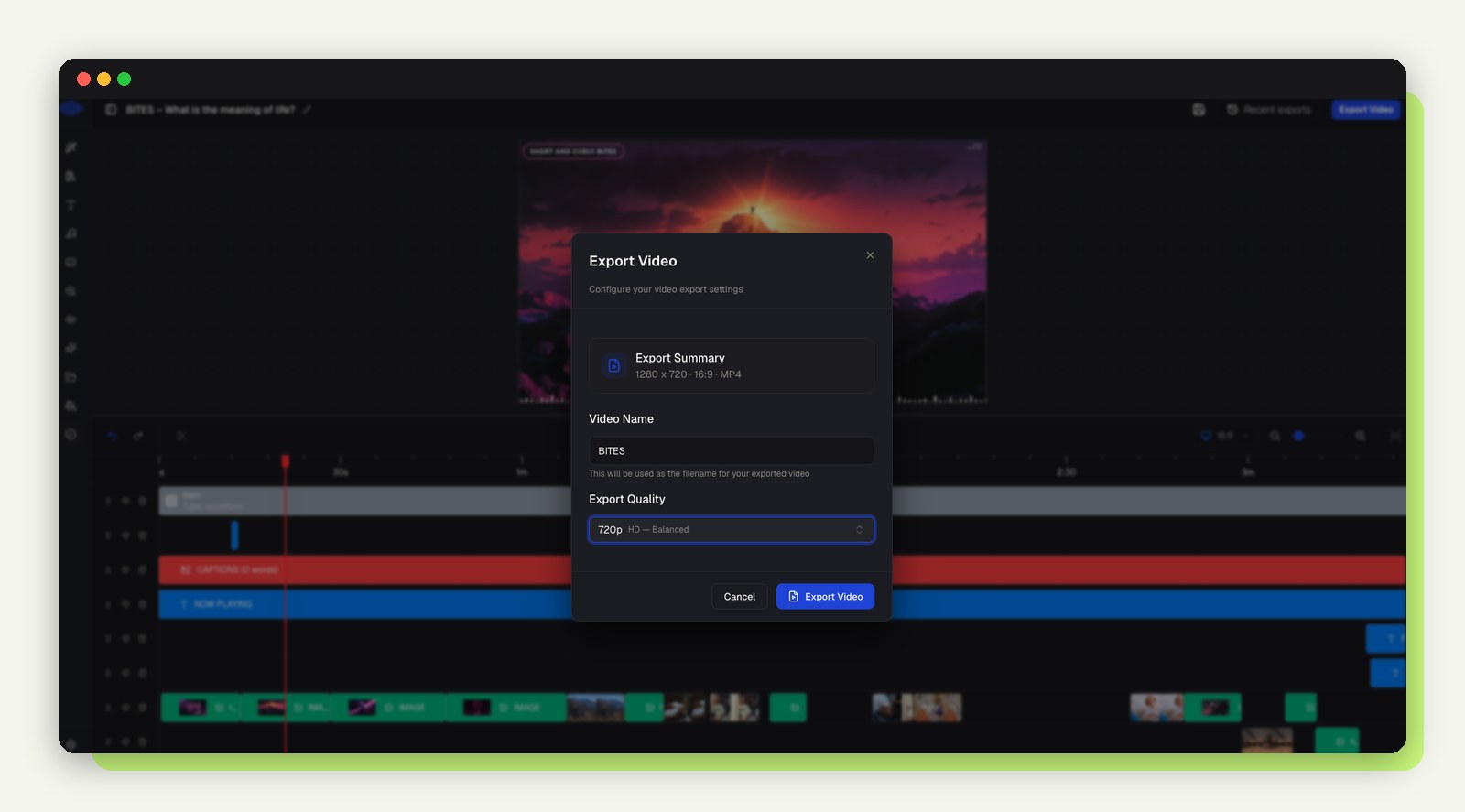
Export and publish. Download the MP4 or send it straight to YouTube with its title, chapters and thumbnail.
How to choose the right tool
Length: can it handle your full recording, or only short clips?
Relevance: do the visuals match what is being said, or is it one looping background?
Caption accuracy: are captions timed to each word and easy to fix?
Publishing: does it give you a title, description, chapters and thumbnail, or just a file?
Privacy: is your audio stored securely, and can you delete it?
Final thoughts
AI has made audio to video practical. You no longer need an editor to put a podcast, lecture or interview on YouTube. Pick the tool that matches the job: short teasers, hand editing, or full episodes. If you want complete, publish-ready videos from long audio, turn your MP3 into a YouTube video with Podeo.ai.
Frequently asked questions
1. What is an AI audio to video generator?
A tool that uses AI to turn an audio file into a video automatically. It adds visuals, captions and transitions without manual editing, so podcasts, lectures and voiceovers can be shared as video.
2. Who should use one?
Podcasters who want to reach YouTube viewers, educators recording lessons, marketers repurposing webinars, and speakers sharing talks.
3. Are AI generated videos good enough to publish?
Yes. The better tools export in HD with accurate captions and visuals that match the topic. Podeo.ai, for example, builds a full directed video you can publish as is or fine-tune.
4. Can I customise the video?
Yes. Most tools let you add your logo, colours and fonts, swap visuals and edit captions. Podeo.ai also lets you describe a change in chat and have the AI make it.
5. How long can the audio be?
It depends on the tool. Some only handle short clips. Podeo.ai supports recordings up to 120 minutes on its Studio plan.
6. What formats are supported?
Audio: usually MP3, WAV and M4A. Video output: usually MP4, in landscape, portrait or square, ready for YouTube, Instagram, TikTok and LinkedIn.
Join our newsletter list
Sign up to get the most recent blog articles in your email every week.
Similar Topic


